Mechanical Pest Control: Traps, Barriers & Safe Methods (Updated 2025)
Discover chemical-free pest control using traps, barriers, and manual tools. Learn safe, effective techniques for homes, gardens, and organic farming.
Mechanical Pest Control Methods: Traps, Barriers, and Others
Mechanical pest control is one of the safest and oldest pest control techniques used in homes, workplaces, and agricultural settings. Unlike chemical pest control that relies on pesticides, mechanical methods utilize physical devices and manual techniques to remove or deter pests. These methods are especially popular in organic farming and among those who wish to avoid harmful chemical exposure.
In this guide, we’ll explore the most effective mechanical pest control techniques—including traps, barriers, and other physical tools—along with tips for optimal use.
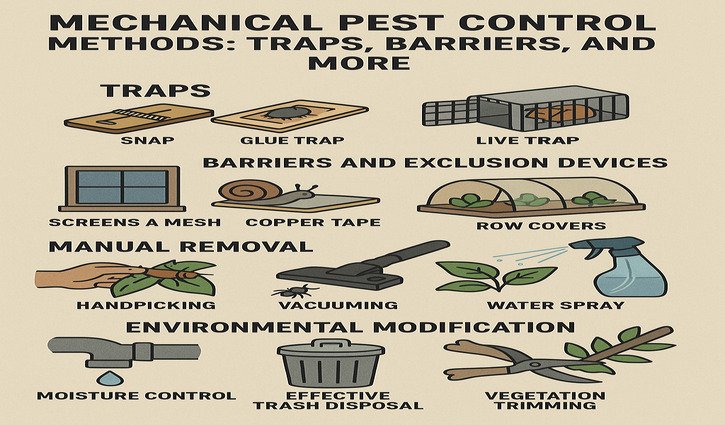
1. Traps
Traps are designed to capture or kill pests without chemicals. Various types of traps are used depending on the type of pest:
-
Snap Traps: Commonly used for mice and rats; they kill instantly upon activation.
-
Glue Traps: Sticky surfaces that trap insects or rodents on contact; ideal for monitoring infestations.
-
Live Traps: Capture larger pests like raccoons or squirrels for humane relocation.
-
Pheromone Traps: Use synthetic pheromones to lure pests (e.g., moths, beetles) into a trap.
Tip: Check and sanitize traps regularly to maintain effectiveness and hygiene.
2. Barriers and Exclusion Devices
Barriers serve as physical blockades, preventing pests from entering areas or reaching food sources.
-
Screens & Mesh: Installed on doors, windows, and vents to stop flying insects.
-
Copper Tape: A natural deterrent for slugs and snails that emits a mild electric shock.
-
Row Covers: Protective fabric placed over crops to keep insects like aphids and beetles away.
-
Sealing Entry Points: Caulking gaps, cracks, and holes in buildings to keep out cockroaches and rodents.
3. Manual Removal
Manual removal involves physically extracting pests from the environment.
-
Handpicking: Useful in gardens for removing beetles, caterpillars, and other visible pests.
-
Vacuuming: Effective for indoor pests like ants, spiders, and bed bugs.
-
Water Spray: A forceful spray can dislodge aphids, mites, and other soft-bodied insects from plants.
Although time-consuming, this method is highly targeted and minimizes harm to beneficial species.
4. Environmental Modification
Altering the environment can make conditions unfavorable for pests, reducing their presence.
-
Moisture Control: Fixing leaks and improving drainage can eliminate mosquito breeding areas and deter cockroaches.
-
Trash Management: Sealing trash bins and compost piles helps keep flies, ants, and rodents away.
-
Vegetation Trimming: Cutting back overgrown plants removes shelter for pests like rats and insects.
5. Mechanical Cultivation Tools
In agriculture, mechanical tools are used to disturb pest habitats and breeding zones.
-
Rotary Tillers: Turn the soil to destroy insect larvae or pupae living underground.
-
Flame Weeders: Burn weeds and destroy insect eggs on the surface.
-
Row Spacers: Increase space between crops to reduce pest transmission.
Advantages of Mechanical Pest Control
-
Chemical-Free: Safe for humans, pets, and the environment.
-
Immediate Results: Traps and physical removal offer fast effects.
-
Low Maintenance: Tools and devices require minimal upkeep.
-
Selective Targeting: Reduces harm to pollinators and non-target species.
When to Use Mechanical Methods
Mechanical pest control is most effective for:
-
Small or early-stage infestations
-
Indoor environments where chemicals are unsafe
-
Organic farming and eco-sensitive areas
-
Integrated Pest Management (IPM) programs
In cases of severe infestations, it can be combined with biological or chemical methods for broader impact.
Conclusion
Mechanical pest control methods like traps, barriers, manual removal, and environmental adjustments offer effective and eco-friendly alternatives to chemical pesticides. When used correctly and consistently, these tools can help maintain a pest-free home, garden, or farm without disrupting the ecosystem. They’re an excellent starting point for anyone seeking safe, sustainable pest control solutions.