How Chemical Pest Control Works Safety & Effectiveness (Updated 2025)
Learn how chemical pest control works, its safety measures, effectiveness against infestations, and when it’s the best solution for homes or businesses.
How Chemical Pest Control Functions: Safety, Efficiency & Applications
Infestations can interfere with daily activities, damage property, and compromise health. Chemical pest control is one of the most widely practiced and efficient ways to control a broad variety of pests. But how exactly does it work? Is it safe? And where is it best applied?
In this guide, we explore the mechanisms, safety considerations, and typical applications of chemical pest control.
What is Chemical Pest Control?
Chemical pest control involves the use of man-made or naturally-derived chemical substances (pesticides) to eliminate, repel, or inhibit the development of pests. These chemicals are designed to disrupt the biological systems of targeted pests such as insects, rodents, fungi, or weeds.
Types of Chemical Pesticides:
-
Insecticides – Target and eliminate insects
-
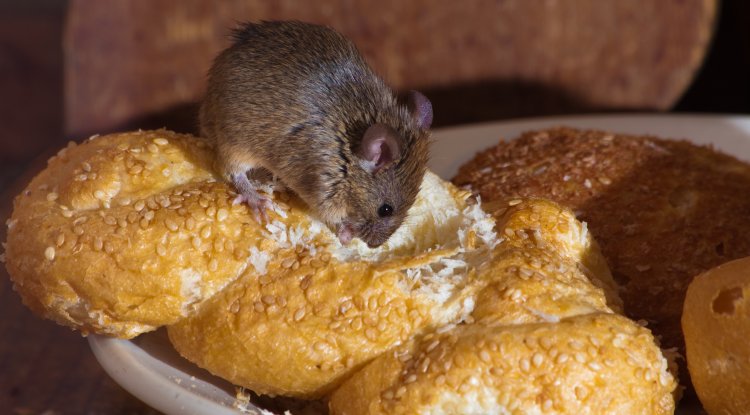
Rodenticides – Target rodents like rats and mice
-
Fungicides – Prevent or destroy fungal growth
-
Herbicides – Kill or inhibit the growth of unwanted plants
How Does Chemical Pest Control Work?
Chemical pest control operates through several mechanisms depending on the pest type and the chemical formulation:
1. Contact Action
Pesticides kill pests by direct contact, affecting their nervous system or internal organs. Effective against crawling insects like cockroaches, ants, and termites.
2. Ingestion Action
Pests consume poisoned bait or treated surfaces. For example, rodents ingest rodenticide and suffer internal organ failure or bleeding.
3. Repellents
Used to deter pests like mosquitoes. These chemicals prevent entry or nesting in specific areas rather than killing the pests.
4. Systemic Action
In agricultural use, systemic pesticides are absorbed by plants. Pests feeding on treated plants consume the toxic compounds and are eliminated.
Effectiveness of Chemical Pest Control
When used correctly, chemical pest control offers several key advantages:
-
Rapid Knockdown: Delivers fast results, often within hours or days.
-
Target-Specific Action: Designed to impact specific pests while minimizing effects on other organisms.
-
Cost-Effective: Especially useful for large-scale infestations where other methods may not be practical.
Potential Drawbacks Include:
-
Development of pesticide resistance in pests
-
Harm to beneficial insects, like bees and butterflies
-
Environmental contamination, particularly through overuse or incorrect disposal
Safety Considerations
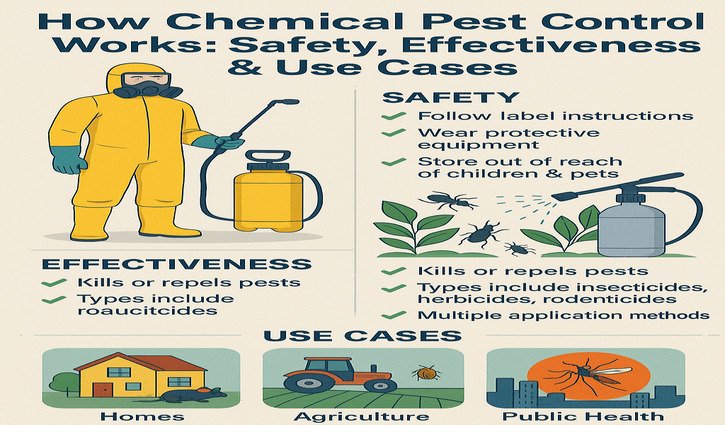
Chemical pest control is effective, but safety is critical. Here are essential precautions:
-
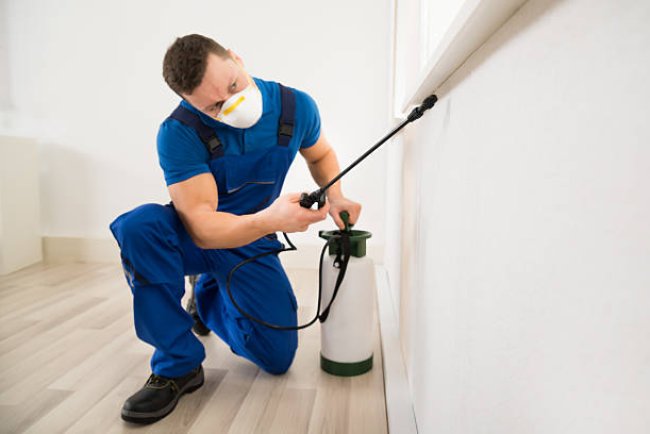
Professional Application: Certified pest control experts know how to safely handle and apply pesticides.
-
Proper Ventilation: Ensures fumes don’t linger, reducing health hazards.
-
Child & Pet Safety: Use child- and pet-safe formulas or temporarily vacate treated areas.
-
Storage & Disposal: Follow label directions and local regulations to avoid accidental poisoning or pollution.
Newer products are increasingly formulated to be low-odor, eco-friendly, and safer for indoor use.
Common Use Cases for Chemical Pest Control
Chemical pest control is widely used in various scenarios, including:
-
Termite Infestations: Treated with liquid termiticides or bait systems.
-
Cockroach Control: Managed using gel baits and residual insecticide sprays in kitchens and bathrooms.
-
Rodent Control: Rodenticides in bait stations help eliminate rats and mice.
-
Mosquito Control: Fogging and spray treatments are used in outdoor and public spaces during outbreaks.
-
Agriculture: Crops are treated with approved chemical agents to prevent loss from fungi, weeds, and insects.
Final Thoughts
Chemical pest control remains a powerful and efficient way to manage pest problems. However, it must be used responsibly to protect human health and the environment. For best results, consider hiring professionals and combining chemical treatments with integrated pest management (IPM) strategies that include non-chemical methods as well.